
Cooperative classroom as a protective factor for mental health-externalizing problems in primary education
DOI:
https://doi.org/10.5944/educxx1.42904Keywords:
cooperative learning, mental health, hyperactivity, externalizing problems, primary education, multilevel analysisAbstract
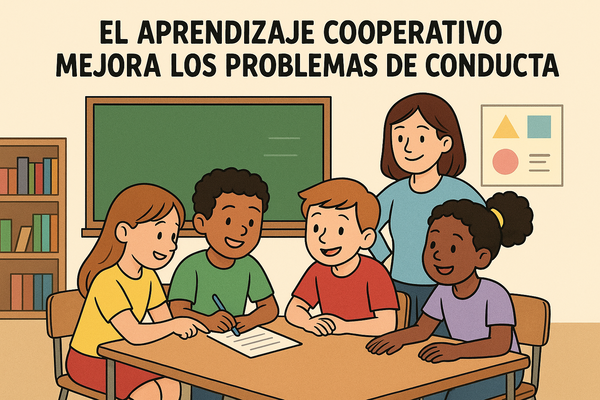
Cooperative learning is used in the classroom to promote teamwork, interaction with peers and improve academic performance. On the other hand, behavioral and emotional problems, related to disruptive behaviors in the classroom, hyperactivity, or attention deficit, translate into behaviors related to aggression, opposition to social patterns, low tolerance to frustration, which occur during childhood and adolescence and have a negative impact on personal, social and family development, affecting school results. The objective of this study is to establish a relationship between cooperative learning in the classroom and externalizing problems in primary school students. A total of 490 students from 5th and 6th of primary schools from 28 classrooms participated, 56.3% of them women, with an average age of 10.56 years. A multilevel analysis was carried out using an ANOVA random effects model, and a regression analysis which would allow us to verify how certain variables studied at the classroom level related to the components of cooperative learning are going to affect externalising problems.
The results indicate that there are statistically significant differences in externalizing problems, base don, on the one hand, overall cooperation in the classroom and on the other hand, social skills and responsibility. This allows us to conclude that the methodology based on cooperative learning in the classroom is effective in directing the behavior of student with externalizing problems, positively affecting on psychological and emotional well-being, the exchange of social support, the development of responsibility and social skills, as well as the reduction of anxiety and stress.
Downloads
References
Albrecht, J. R., & Karabenick, S. A. (2018). Relevance for learning and motivation in education. Journal of Experimental Education, 86 (1), 1–10. https://doi.org/10.1080/00220973.2017.1380593
Andrade, B.F., & Tannock, R. (2014). Sustained Impact of Inattention and Hyperactivity-Impulsivity on Peer Problems: Media - ting Roles of Prosocial Skills and Conduct Problems in a Community Sample of Children. Child Psychiatry & Human Development, 45(3), 318-328. https://doi.org/10.1007/s10578-013-0402-x
APA (2010). Publication Manual of the American Psychological Association (6th Ed). American Psychological Association.
Aronson, E., & Osherow, N. (1980). Cooperation, prosocial behavior, and academic performance. En L. Bickman (Ed.), Applied Social Psychology Annual, (Vol. 1, pp. 163-196). Sage
Bermejo, J., Pulido, D., Galmes-Panades, A., Serra P., V. J., & Ponseti, F. (2021). Educación física y universidad: Evaluación de una experiencia docente a través del aprendizaje cooperativo. Retos, 39, 90-97. https://doi.org/10.47197/retos.v0i39.77834
Boix, S., & Ortega, N. (2020). Beneficios del aprendizaje cooperativo en las áreas troncales de Primaria: Una revisión de la literatura científica. ENSAYOS: Revista de la Facultad de Educación de Albacete, 35(1), 1-13. https://doi.org/10.18239/ensayos.v35i1.1901
Camacho-Minuche, G., Espinoza-Celi, V., & Ulehlova, E. (2021). Cooperative language learning elements to enhance social skills in English classrooms: a case study. Higher Education, Skills and Work-Based Learning, 11(5), 1116-1129. https://doi.org/10.1108/HESWBL-08-2020-0176
Danneel, S., Nelemans, S., Spithoven, A., Bastin, M., Bijttebier, P., Colpin, H., & Goossens, L. (2019). Internalizar problemas en la adolescencia: vincular la soledad, los síntomas de ansiedad social y los síntomas depresivos a lo largo del tiempo. Revista de psicología infantil anormal, 47(10), 1691-1705. https://doi.org/10.1007/s10802-019-00539-0
Fernández-Río, J., Cecchini, J.A., Méndez-Giménez, A., Méndez-Alonso, D., & Prieto, J.A. (2017). Design and validation of a questionnaire to assess cooperative learning in educational contexts. Anales de Psicología, 33(3), 680-688. https://doi.org/10.6018/analesps.33.3.251321
Fonseca-Pedrero, E., Ortuño-Sierra, J., & Pérez-Albéniz, A. (2020). Dificultades emocionales y conductuales y comportamiento prosocial en adolescentes: Un análisis de perfiles latentes. Revista de Psiquiatría y Salud Mental, 13(4), 202-212. https://doi.org/10.1016/j.rpsm.2020.01.002
García-Gil, M.A., Fajardo-Bullón, F., & Felipe-Castaño, E. (2022). Análisis del rendimiento académico y la salud mental de los alumnos de educación secundaria según el acceso a los recursos tecnológicos. Educación XX1, 25(2), 243-270. https://doi.org/10.5944/educxx1.31833
Gillies, R. (2016). Cooperative Learning: Review of Research and Practice. Australian Journal of Teacher Education, 41(3), 39-53. https://doi.org/10.14221/ajte.2016v41n3.3
González-Moreno, A., & Molero-Jurado, M. del M. (2022). Las habilidades sociales y su relación con otras variables en la etapa de la adolescencia: Una revisión sistemática. Revista Iberoamericana de Psicología, 15(1), 113-123. https://doi.org/10.33881/2027-1786.rip.15111
Goodman, R. (1997). The strengths and difficulties questionnaire: A research note. Journal of Child Psychology and Psychiatry and Allied Disciplines, 38(5), 581-586. https://doi.org/10.1111/j.1469-7610.1997.tb01545.x
Hand, E. D., & Lonigan, C. J. (2022). Examining the relations between Preschooler’s externalizing behaviors and academic performance using an S-1 bifactor model. Research on Child and Adolescent Psychopathology, 50(5), 577–589. https://doi.org/10.1007/s10802-021-00861-6
Houweling, T. A. J., Oude Groeniger, J., Jansen, P. W., Van Lier, P., Horoz, N., Buil. M., & Van Lenthe, F. J. (2022). Trajectories of socioeconomic inequality in early child development: A cohort analysis. International Journal for Equity in Health, 21(1), 1–10. https://doi.org/10.1186/s12939-022-01675-8
Johnson, D. W., & Johnson, R. T. (1990). Cooperation and competition. Theory and research. Addison-Wesley.
Johnson, D. W., Johnson, R. T., & Holubec, E. J. (2013). Cooperation in the classroom (9th ed.). Interaction Book Company
Johnson, D. W., Johnson, R. T., Roseth, C., & Shin, T. S. (2014). The relationship between motivation and achievement in interdependent situations. Journal of Applied Social Psychology, 44(9), 622-633. https://doi.org/10.1111/jasp.12280
Johnson, D. W., & Johnson, R. T. (2018). Aprendizaje cooperativo e inclusión. Impacto de la interdependencia social en los resultados. En J.C. Torrego, L. Rayón, Y. Muñoz, & P. Gómez (Eds), Inclusión y mejora educativa (pp. 19-47). Universidad de Alcalá: Servicio de Publicaciones.
Kagan, S. (1994). Cooperative learning. Resources for Teachers, Inc.
León-del-Barco, B., Mendo-Lázaro, S., Felipe-Castaño, E., Polo-del-Río, M.I., & Fajardo-Bullón, F. (2017). Potencia de equipo y aprendizaje cooperativo en el ámbito Universitario. Revista de Psicodidáctica, 22(1), 9-15. https://doi.org/10.1016/S1136-1034(17)30038-2
León-del Barco, B., Mendo-Lázaro, S., Polo-del-Río, M.I., & Rasskin, I. (2019). University Student´s Academic Goals When Working in Teams: Questionnaire on Academic Goals in Teamwork, 3x2 Model. Frontiers in Psychology, 10(2434), 1-11. https://doi.org/10.3389/fpsyg.2019.02434
León-del-Barco, B., Fernández-Rio, J., Rivera, S., & Iglesias-Gallego, D. (2023). Cooperative Learning, Emotions, and Academic Performance in Physical Education: A Serial Multiple Mediation Model. Educational Psychology, 29(1), 75-82. https://doi.org/10.5093/psed2023a2
Mamani, R. A. (2019). Aprendizaje cooperativo y autoestima en los estudiantes del sexto grado de primaria de la Institución Educativa “Planteles de aplicación”- La Cantuta, Lurigancho, 2019. [Tesis doctoral, Universidad César Vallejo]. Repositorio institucional-UCV. https://hdl.handle.net/20.500.12692/54642
Manzano-Sánchez, D., González-Víllora, S., & Valero-Valenzuela, A. (2021). Aplication of the Teaching Personal and Social Responsibility Model in the Secondary Education Curriculum: Implications in Psychological and Contextual Variables in Students. International Journal of Environmental Research and Public Health, 18, 3047. https://doi.org/10.3390/ijerph18063047
Martin‐Herz, S. P., McMahon, R. J, Malzyner, S., Chiang, N., & Zatzick, DF (2022). Impact of posttraumatic stress disorder and depressive symptoms on quality of life in adolescents after general traumatic injury. Journal of Traumatic Stress, 35(2), 386-397. https://doi.org/10.1002/jts.22750
Mendo-Lázaro, S., León-del-Barco, B., Felipe-Castaño, E., Polo-del-Río, M. I., & Iglesias-Gallego, D. (2018). Cooperative Team Learning and the Development of Social Skills in Higher Education: The Variables Involved. Frontiers in Psychology, 9, 1-11. https://doi.org/10.3389/fpsyg.2018.01536
Mikami, A.Y., & Lorenzi, J. (2011). Gender and Conduct Problems Predict Peer Functioning among Children with Attention-Deficit/Hyperactivity Disorder. Journal of Clinical Child & Adolescent Psychology, 40 (5), 777-786. https://doi.org/10.1080/15374416.2011.597089
Navarro-Patón, R., Lago-Ballesteros, J., & Basanta-Camiño, S. (2019). Conductas prosociales de escolares de educación primaria: influencia de los juegos cooperativos. SPORT TK: Revista EuroAmericana de Ciencias del Deporte, 8(2), 33-37. https://doi.org/10.6018/sportk.401081
Ovejero, A. (2018). Aprendizaje Cooperativo Crítico: Mucho más que una eficaz técnica pedagógica. Pirámide.
Polo-del-Río, M.I., Mendo-Lázaro, S., Fajardo-Bullón, F., & León-del-Barco, B. (2017). Una intervención en aprendizaje cooperativo sobre el perfil del observador en la dinámica bullying. Universitas Psychologica, 16(1), 1-13. http://dx.doi.org/10.11144/Javeriana.upsy16-1.iacp
Rivera-Pérez, S., León-del-Barco, B., González-Bernal, J., & Iglesias-Gallego, D. (2021). Aprendizaje cooperativo y metas de aproximación en educación física: El rol discriminante de la responsabilidad individual. Revista de Psicodidáctica, 26, 78-85. https://doi.org/10.1016/j.psicod.2020.11.001
Salavera, C., & Usán, P. (2019). Influencia de los problemas internalizantes y externalizantes en la autoeficacia en estudiantes de Secundaria. Revista de Investigación Educativa, 37(2), 413-429. http://dx.doi.org/10.6018/rie.37.2.323351
Sampaio, L., & Flores, C. (2018). Relación entre conductas externalizantes en la infancia y rasgos de personalidad en la vida adulta. Revista de Psicología Clínica con niños y adolescentes, 5(3), 36-41. https://doi.org/10.21134/rpcna.2018.05.3.5
Sharifi-Shayan, F., Entesar-Foumani, G. H., & Hejazi, M. (2020). The Effectiveness of Collaborative Learning Method on Academic Motivation and Emotion Control in Children with Attention Deficit / Hyperactivity Disorder. Journal of Child Mental Health, 6(4), 74-84. http://dx.doi.org/10.29252/jcmh.6.4.8
Slavin, R. E. (2012). Classroom applications of cooperative learning. In K. R. Harris, S. Graham, T. Urdan, A. G. Bus, S. Major, & H. L. Swanson (Eds.), APA educational psychology handbook, Application to learning and teaching (Vol. 3, pp. 359–378). American Psychological Association. https://doi.org/10.1037/13275-014
Sorcher, L. K., Goldstein, B. L., Finsaas, M. C., Carlson, G. A., Klein, D. N., & Dougherty, L. R. (2022). Preschool irritability predicts adolescent psychopathology and functional impairment: A 12-year prospective study. Journal of the American Academy of Child and Adolescent Psychiatry, 61(4), 554–564. https://doi.org/10.1016/j.jaac.2021.08.016
Sullivan, A. D. W., Forehand. R., Vreeland, A., & Compas, B. E. (2022). Does parenting explain the link between cumulative SES risk and child problems in the context of parental depression? Child Psychiatry and Human Development, 53(2), 330–341. https://doi.org/10.1007/s10578-021-01130-9
Tacca-Huamán, D.R., Cuarez-Cordero, R., & Quispe-Huaycho, R. (2020). Habilidades Sociales, Autoconcepto y Autoestima en Adolescentes Peruanos de Educación Secundaria. International Journal of Sociology of Education, 9(3), 293-324.
https://doi.org/10.17583/rise.2020.5186
Trigueros, R., Sánchez-Sánchez, E., Mercader, I., Aguilar-Parra, J.M., López-Liria, R., Morales-Gázquez, M.J., Fernández-Campoy, J.M., & Rocamora, P. (2020). Relationship between Emotional Intelligence, Social Skills and Peer Harassment. A Study with High School Students. International Journal of Environmental Research and Public Health, 17(12), 4208. https://doi.org/10.3390/ijerph17124208
Van Ryzin, M. J., Roseth, C. J., & Biglan, A. (2020). Mediators of Effects of Cooperative Learning on Prosocial Behavior in Middle School. International Journal of Applied Positive Psychology, 5(1-2), 37-52. https://doi.org/10.1007/s41042-020-00026-8
Wang, Y., & Liu, Y. (2021). The development of internalizing and externalizing problems in primary school: Contributions of executive function and social competence. Child Development, 92(3), 889-903. https://doi.org/10.1111/cdev.13462
Downloads
Published
How to Cite
Issue
Section
License
Copyright (c) 2025 Benito León del Barco, Carolina Bringas Molleda, María Isabel Polo del Río, Santiago Mendo Lázaro, Víctor López Ramos

This work is licensed under a Creative Commons Attribution-NonCommercial 4.0 International License.
Educación XX1 is published under a Creative Commons Attribution-NonCommercial 4.0 (CC BY-NC 4.0)


