Impacto del aprendizaje mejorado con tecnología en el rendimiento y compromiso del alumnado: metaanálisis
DOI:
https://doi.org/10.5944/educxx1.42286Palabras clave:
aprendizaje mejorado por la tecnología, rendimiento, compromiso, alumnado, metaanálisisResumen
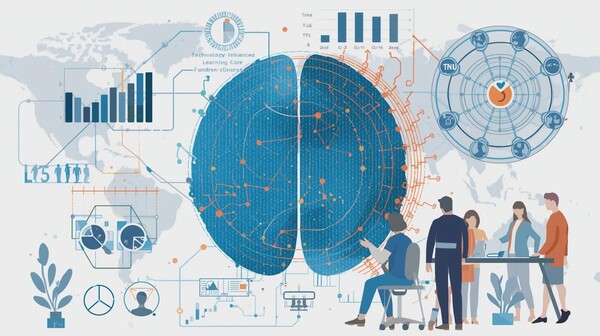
El aprendizaje mejorado por la tecnología (TEL, por sus siglas en inglés) se ha convertido en una propuesta de interés relevante, debido principalmente a su potencial para transformar los contextos educativos y las experiencias de aprendizaje, contribuyendo a crear un sistema educativo integrador, que atiende las distintas necesidades de aprendizaje del alumnado. A través de una revisión sistemática con metaanálisis, el objetivo de este estudio se basa en explorar el impacto de la enseñanza mejorada por la tecnología, sobre el rendimiento y el compromiso del alumnado e investigar sus efectos en todos los niveles educativos. Siguiendo los protocolos de la declaración PRISMA, se identificaron 26 estudios publicados en PubMed, ERIC, Web of Science y Scopus, desde el año 2000 hasta la actualidad, desarrollados en diferentes contextos educativos. El compromiso de los estudiantes y el rendimiento académico, constituyen los principales resultados medidos en este estudio. Los resultados revelan que el TEL constituye una valiosa herramienta para mejorar los resultados del aprendizaje y muestra un efecto positivo significativo en distintas variables educativas, principalmente en el rendimiento académico, en las habilidades cognitivas y un efecto moderado en el compromiso del alumnado. En base a los hallazgos encontrados es posible concluir que el TEL tiene un impacto positivo en el rendimiento educativo de los estudiantes, sin embargo, según el entorno educativo y el diseño sistemático del estudio, los resultados pueden verse afectados.
Descargas
Citas
Al-Sharhan, S. (2016). Smart classrooms in the context of technology-enhanced learning (TEL) environments: A holistic approach. In K. Alshahrani, y M. Ally (Eds.), Transforming Education in the Gulf Region (pp. 188-214). Routledge.
Al-Soraiey-Alqahtani, A. (2010). The Effectiveness of using e-learning, blended learning and traditional learning on students’ achievement and attitudes in a course on Islamic Culture: An experimental study (Doctoral dissertation, Durham University).
Albarrak, A. I. (2011). E-learning in medical education and blended learning approach. Learning, 13, 14-20.
Alsalhi, N. R., Eltahir, M., Al-Qatawneh, S., Ouakli, N., Antoun, H. B., Abdelkader, A. F., & Al Jumaili, L. (2021). Blended Learning in Higher Education: A Study of Its Impact on Students’ Performance. International Journal of Emerging Technologies in Learning, 16(14), 249-268. https://doi.org/10.3991/ijet.v16i14.23775
Baneres, D., Whitelock, D., Ras, E., Karadeniz, A., Guerrero-Roldán, A. E., & Rodriguez, M. E. (2019). Technology enhanced learning or learning driven by technology. International journal of educational technology in higher education, 16(5), 26-40.
Berestok, O.V. (2021) Synchronous and asynchronous e-learning modes: strategies, methods, objectives. Engineering and Educational Technologies, 9(1), 19-27.
Borraccino, A., Lemma, P., Iannotti, R., Zambon, A., Dalmasso, P., Lazzeri, G., Giacchi, M., & Cavallo, F. (2009). Socio-economic effects on meeting PA guidelines: comparisons among 32 countries. Medicine and science in sports and exercise 41(4), 749-756. https://doi.org/10.1249/MSS.0b013e3181917722
Cerin, E., Leslie, E., & Owen, N. (2009). Explaining socio-economic status differences in walking for transport: an ecological analysis of individual, social and environmental factors. Social science & medicine 68(6), 1013-1020. https://doi.org/10.1016/j.socscimed.2009.01.008
Daniela, L., Strods, R., & Kalniņa, D. (2019). Technology-Enhanced Learning (TEL) in Higher Education: Where Are We Now?. In M.D. Lytras, L. Daniela, y A. Visvizi, (Eds.), Knowledge-intensive economies and opportunities for social, organizational, and technological growth (pp. 12-24). IGI Global.
Delgado-Rodríguez, M., & Llorca, J. (2004). Bias. Journal of Epidemiology & Community Health, 58(8), 635-641. https://doi.org/10.1136/jech.2003.008466
Downie, S., Gao, X., Bedford, S., Bell, K., & Kuit, T. (2021). Technology enhanced learning environments in higher education: A cross-discipline study on teacher and student perceptions. Journal of University Teaching and Learning Practice, 18(4), Article 12. https://doi.org/10.53761/1.18.4.12
Dunn, T. J., & Kennedy, M. (2019). Technology Enhanced Learning in higher education; motivations, engagement and academic achievement. Computers & Education, 137, 104-113. https://doi.org/10.1016/j.compedu.2019.04.004
Ellis, J., Wieselmann, J., Sivaraj, R., Roehrig, G., Dare, E., & Ring-Whalen, E. (2020). Toward a productive definition of technology in science and STEM education. Contemporary issues in technology and teacher education, 20(3), 472-496
Goodchild, T., & Speed, E. (2018). Technology enhanced learning as transformative innovation: a note on the enduring myth of TEL. Teaching in Higher Education, 24(8), 948-963. https://doi.org/10.1080/13562517.2018.1518900
Hasumi, T., & Chiu, M. S. (2024). Technology-enhanced language learning in English language education: Performance analysis, core publications, and emerging trends. Cogent Education, 11(1). https://doi.org/10.1080/2331186X.2024.2346044
Hennessy, S., D’Angelo, S., McIntyre, N., Koomar, S., Kreimeia, A., Cao, L., Brugha, M., Zubairi, A., (2022). Technology use for teacher professional development in lowand middle-income countries: A systematic review. Computers and Education Open, 3, 100080. https://doi.org/10.1016/j.caeo.2022.100080
Higgins, J. P. T., Altman, D. G., Gøtzsche, P. C., Jüni, P., Moher, D., Oxman, A. D., Savovic, J., Schulz, K. F., Weeks, L., Sterne, J. A. C., & Cochrane Bias Methods Group (2011). The Cochrane Collaboration’s tool for assessing risk of bias in randomised trials. BMJ, 343, d5928. https://doi.org/10.1136/bmj.d5928
Holmlund, T. D., Lesseig, K., & Slavit, D. (2018). Making sense of “STEM education” in K-12 contexts. International Journal of STEM Education, 5, 1-18. https://doi.org/10.1186/s40594-018-0127-2
Islami, F., Kamangar, F., Nasrollahzadeh, D., Aghcheli, K., Sotoudeh, M., Abedi-Ardekani, B., ... & Malekzadeh, R. (2009). Socio-economic status and oesophageal cancer: results from a population-based case–control study in a high-risk area. International Journal of Epidemiology, 38(4), 978-988.
Jadad, A. R., Moore, R.A., Carroll, D., Jenkinson, C., Reynols, D. J., Gavaghan, D. J. y McQuay, H. J. (1996). Assesing the quality of reports of randomized clinical trials: is blinding necessary? Controlled Clinical Trials, 17(1), 1-12.
Kaqinari, T., Makarova, E., Audran, J., Döring, A., Göbel, K., & Kern, D. (2021). The switch to online teaching during the first COVID-19 lockdown: A comparative study at four European universities. Journal of University Teaching & Learning Practice, 18(5). https://doi.org/10.53761/1.18.5.10
Kim, J., Kwon, Y., & Cho, D. (2011). Investigating factors that influence social presence and learning outcomes in distance higher education. Computers & Education, 57(2), 1512-1520. https://doi.org/10.1016/j.compedu.2011.02.005
Kirkwood, A., & Price, L. (2013). Technology-enhanced learning and teaching in higher education: what is ‘enhanced’ and how do we know? A critical literature review. Learning, Media and Technology, 39(1), 6-36. https://doi.org/10.1080/17439884.2013.770404
Kumar, A., Krishnamurthi, R., Bhatia, S., Kaushik, K., Ahuja, N.J., Nayyar, A., Masud, M. (2021). Blended learning tools and practices: A comprehensive analysis. Ieee Access 9, 85151-85197. https://doi.org/10.1109/ACCESS.2021.3085844
Levin, T., & Wadmany, R. (2008). Teachers’ views on factors affecting effective integration of information technology in the classroom: Developmental scenery. Journal of Technology and Teacher Education, 16(2), 233-263.
Lynch, S.J., Burton, E.P., Behrend, T., House, A., Ford, M., Spillane, N., Matray, S., Han, E., Means, B., (2017). Understanding inclusive STEM high schools as opportunity structures for underrepresented students: Critical components. Journal of Research in Science Teaching, 55, 712-748. https://doi.org/10.1002/tea.21437
Mann, B. O., & Mann, D. C. (2020). A Study of Teacher Perceptions on the Impact of Technology-Enhanced Practices and Student Engagement (Doctoral dissertation, Samford University).
Menchaca, M. P., & Bekele, T. A. (2008). Learner and instructor identified success factors in distance education. Distance Education, 29(3), 231–252. https://doi.org/10.1080/01587910802395771
Morris, N. P. (2010). Blended Learning Approaches Enhance Student Academic Performance. In Proceedings of Enhancing Learning Experiences in Higher Education: International Conference. Hong Kong University. http://www.cetl.hku.hk/conference2010/conf_proc.htm
Motala, S., & Menon, K. (2022). Pedagogical continuities in teaching and learning during COVID-19: Holding up the bridge. Scholarship of Teaching and Learning in the South, 6(1), 7-32. https://doi.org/10.36615/sotls.v6i1.249
Mumtaz, K., Iqbal, M. M., Khalid, S., Rafiq, T., Owais, S. M., & Al Achhab, M. (2017). An E-assessment framework for blended learning with augmented reality to enhance the student learning. Eurasia Journal of Mathematics, Science and Technology Education, 13(8), 4419-4436. https://doi.org/10.12973/eurasia.2017.00938a
Owens, A. D., & Hite, R.L. (2020). Enhancing student communication competencies in STEM using virtual global collaboration project based learning. Research in Science & Technological Education, 40(1), 76-102. https://doi.org/10.1080/02635143.2020.1778663
Pereira De Sousa, B.F. (2018). Engaging students in the evaluation process using cocreation and technology enhanced learning (CC-TEL). CC-TEL. Leeds.
Rennar-Potacco, D., Orellana, A., & Salazar, A. (2017). Innovations in academic support: Factors influencing student adoption of synchronous videoconferencing for online support in high-risk STEM courses. Quarterly Review of Distance Education, 18(3), 1-92.
Sailer, M., Maier, R., Berger, S., Kastorff, T., & Stegmann, K. (2024). Learning activities in technology-enhanced learning: A systematic review of meta-analyses and second-order meta-analysis in higher education. Learning and Individual Differences, 112, 102446.
Sánchez-Meca, J. (2022). Revisiones sistemáticas y meta-análisis en Educación: un tutorial. RiiTE Revista interuniversitaria de investigación en Tecnología Educativa, 5-40. https://doi.org/10.6018/riite.545451
Serrano, D.R., Dea‐Ayuela, M. A., Gonzalez‐Burgos, E., Serrano‐Gil, A., & Lalatsa, A. (2019). Technology‐enhanced learning in higher education: How to enhance student engagement through blended learning. European Journal of Education, 54(2), 273-286. https://doi.org/10.1111/ejed.12330
Shapley, K.S., Sheehan, D., Maloney, C., & Caranikas-Walker, F. (2010). Evaluating the Implementation Fidelity of Technology Immersion and its Relationship with Student Achievement. The Journal of Technology, Learning and Assessment, 9(4).
Smith, B.G. (2010). E-learning technologies: A comparative study of adult learners enrolled on blended and online campuses engaging in a virtual classroom (Doctoral dissertation, Capella University).
Tytler, R., Osborne, J., Williams, G., Tytler, K., & Cripps Clark, J. (2008). Opening up pathways: Engagement in STEM across the primary-secondary school transition. Canberra: Australian Department of Education, Employment and Workplace Relations.
Page, M.J., McKenzie, J. E., Bossuyt, P. M., Boutron,I., Hoffmann, T.C., Mulrow, C.D., Shamseer, L., Tetzlaff, J. M., Akl, E. A., Brennan, S.E., Chou, R., Glanville, J., Grimshaw, J.M., Hro´bjartsson, A., Lalu, M.M., Li, T., Loder, E. W., Mayo-Wilson, E., McDonald, S., …, & Moher D. (2021). Declaración PRISMA 2020: una guía actualizada para la publicación de revisiones sistemáticas. Revista Española de Cardiología, 74(9), 790-799. https://doi.org/10.1016/j.recesp.2021.06.016
Descargas
Publicado
Cómo citar
Número
Sección
Licencia
Derechos de autor 2025 María Luisa Pérez-Conde, Tamara De La Torre Cruz, María Isabel Luis Rico

Esta obra está bajo una licencia internacional Creative Commons Atribución-NoComercial 4.0.
La revista Educación XX1 se publica bajo licencia Creative Commons Reconocimiento-NoComerciaL 4.0 (CC BY-NC 4.0). Se permite la generación de obras derivadas siempre que no se haga un uso comercial. Tampoco se puede utilizar la obra original con finalidades comerciales.