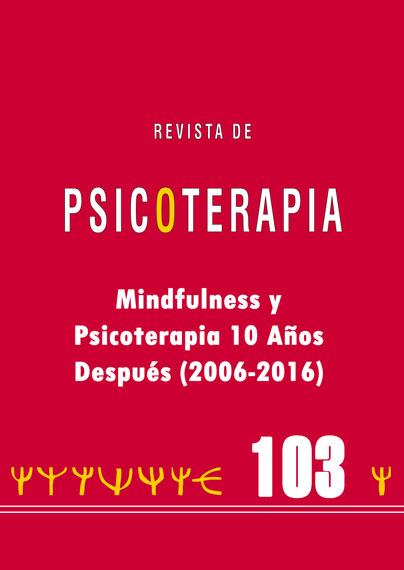
The effectiveness of MBCT for Bipolar Disorder: A Systematic Literature Review
DOI:
https://doi.org/10.33898/rdp.v27i103.57Keywords:
mood disorders, bipolar disorder, mindfulness, MBCT, cognitiveAbstract
Individuals with Bipolar Disorder (BD) often present associated neurocognitive deficits that adversely influence self-regulation and quality of life. However, mindfulness-based practices are associated with significant improvements in attention, working memory, and emotion regulation. As such, we hypothesized that an intervention such as Mindfulness Based Cognitive Therapy (MBCT), initially created for the treatment of Depression (Segal, Williams, & Teasdale, 2002), would effectively improve self regulation in patients with BD. The following databases were searched for peer-reviewed articles pertaining to MBCT for BD: PubMed, PsychINFO, PsychArticles, and CINAHL, using the keywords: “MBCT and Bipolar Disorder”, “MBCT y Trastorno Bipolar”, and “MBCT y Bipolaridad”. Literature reviews, articles unavailable in English or Spanish, and studies that addressed MBCT for other psychiatric conditions were excluded. Findings from the systematic literature review (n=10) suggest that MBCT is associated to significant improvements in emotional stability, neurocognitive functioning and treatment adherence, particularly in patients with a lifetime history of 12 or more affective episodes.Downloads
Downloads
Published
How to Cite
Issue
Section
License
Authors who publish in this journal accept the following conditions:
-
Authors retain copyright and grant the journal the right of first publication, with the work registered under the Creative Commons CC-BY-NC 4.0 International license. This license allows third parties to cite the text and use it without alteration and for non-commercial purposes, provided they credit the authorship of the work and its first publication in this journal.
-
Authors may enter into other independent and additional contractual agreements for the non-exclusive distribution of the version of the article published in this journal (e.g., including it in an institutional repository or publishing it in a book), provided they clearly indicate that the work was first published in this journal.
-
The views expressed in the articles are solely the responsibility of the authors and in no case do they reflect the opinions or scientific policies of the journal.