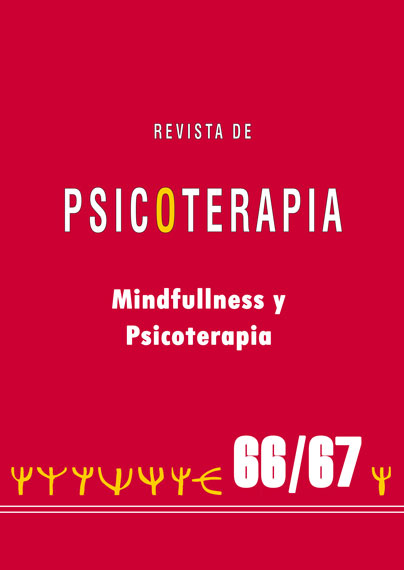
Mindfulness and neurobiology
DOI:
https://doi.org/10.33898/rdp.v17i66/67.905Keywords:
mindfulness, empathy, immunity, affective style, prefrontal cortex, traits, psychotherapy, interpersonal neurobiologyAbstract
Recently, in specific research and publications, we observe the introduction of the term mindfulness and its techniques in the fields of education, psychotherapy and science in general. One of the reasons for this development is the increasing knowledge in the neurobiology of mindfulness. In this paper we review some of the most outstanding findings in this field, such as the effects of mindfulness on perception (openness), affective style (positive affect and approach mindset), immunity (enhanced) and empathy (increased). The research suggests that mindfulness practice activates several brain regions (like the prefrontal cortex) specialized in mediating human integrative functions. Moreover, prolonged mindfulness practice produces morphological changes in the cerebral cortex that correlate with changes in mental habits and character traits. Thus, the new field of Interpersonal Neurobiology, with its knowledge from different disciplines may even shape the clinical practice of psychotherapy.
Downloads
Downloads
Published
How to Cite
Issue
Section
License
Authors who publish in this journal accept the following conditions:
-
Authors retain copyright and grant the journal the right of first publication, with the work registered under the Creative Commons CC-BY-NC 4.0 International license. This license allows third parties to cite the text and use it without alteration and for non-commercial purposes, provided they credit the authorship of the work and its first publication in this journal.
-
Authors may enter into other independent and additional contractual agreements for the non-exclusive distribution of the version of the article published in this journal (e.g., including it in an institutional repository or publishing it in a book), provided they clearly indicate that the work was first published in this journal.
-
The views expressed in the articles are solely the responsibility of the authors and in no case do they reflect the opinions or scientific policies of the journal.