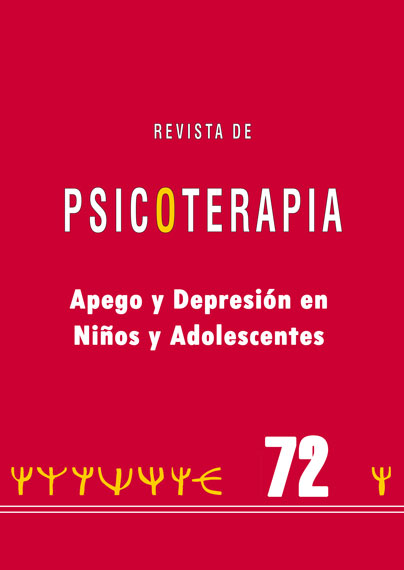
Attachment and adolescent depression: the impact of early attachment experiences.
DOI:
https://doi.org/10.33898/rdp.v18i72.714Keywords:
Adolescents, depression, attachment, culture, gender, adolescents, depression, attachment, culture, genderAbstract
Bowlby’s (1969/1982) ideas of attachment as an interactional system provide the basis for an understanding of the development of adaptive and maladaptive working models of the self and other. More specifically, attachment theory can offer an in-depth understanding into the development of a depressotypic self-schema. Attachment theory is set alongside research into adolescent depression in order to illustrate the importance of the primary attachment relationship in protecting adolescents in our society from developing depressive symptomatology. Therefore, current research in adolescent depression is viewed through the lens of attachment theory. This view is complemented by an exploration of the role of culture in the production of gender differences in depression. Thus, a tripartite model of adolescent depression, including the individual, family relationships, and sociocultural factors is offered as being of potential value for clinicians and researchers in this area.
Downloads
Downloads
Published
How to Cite
Issue
Section
License
Authors who publish in this journal accept the following conditions:
-
Authors retain copyright and grant the journal the right of first publication, with the work registered under the Creative Commons CC-BY-NC 4.0 International license. This license allows third parties to cite the text and use it without alteration and for non-commercial purposes, provided they credit the authorship of the work and its first publication in this journal.
-
Authors may enter into other independent and additional contractual agreements for the non-exclusive distribution of the version of the article published in this journal (e.g., including it in an institutional repository or publishing it in a book), provided they clearly indicate that the work was first published in this journal.
-
The views expressed in the articles are solely the responsibility of the authors and in no case do they reflect the opinions or scientific policies of the journal.