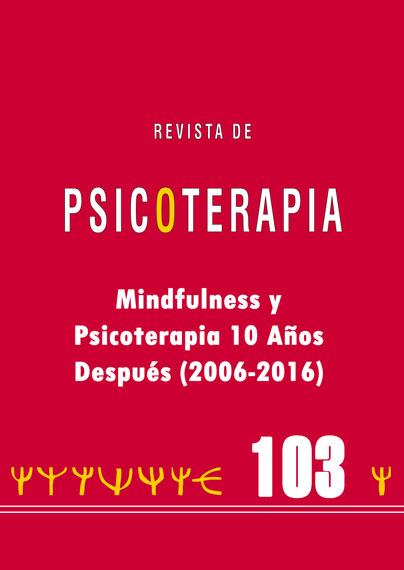
MBCT (Mindfulness-Based Cognitive Therapy): Origin, Scope, and Effectiveness
DOI:
https://doi.org/10.33898/rdp.v27i103.105Keywords:
mindfulness, MBCT, cognitive therapy, depressionAbstract
Mindfulness-Based cognitive therapy (MBCT) is the result of the integration of Mindfulness and the cognitive-behavioral therapy for depression. Initially conceived as an intervention to prevent relapses in patients with recurrent depression, its scope has evolved to be taught to a much wider range of people and environments. The first objective of this article is to provide an understanding of the context in which the program develops –the cognitive model of depression– and its theoretical premises. The second objective is to review the research on its efficacy and the action mechanisms of change. Finally, different areas where the program has proved to be effective are reviewed, beyond mood disorders. Research consistently shows how the MBCT intervention improves well-being in clinical population and a growing number of studies reveal the same positive effects in healthy adults. In line with theoretical predictions, increases in Mindfulness skills, awareness and self-compassion and decreases in worry and ruminations are the mechanisms that mediate the change after an intervention with MBCT.Downloads
Downloads
Published
How to Cite
Issue
Section
License
Authors who publish in this journal accept the following conditions:
-
Authors retain copyright and grant the journal the right of first publication, with the work registered under the Creative Commons CC-BY-NC 4.0 International license. This license allows third parties to cite the text and use it without alteration and for non-commercial purposes, provided they credit the authorship of the work and its first publication in this journal.
-
Authors may enter into other independent and additional contractual agreements for the non-exclusive distribution of the version of the article published in this journal (e.g., including it in an institutional repository or publishing it in a book), provided they clearly indicate that the work was first published in this journal.
-
The views expressed in the articles are solely the responsibility of the authors and in no case do they reflect the opinions or scientific policies of the journal.