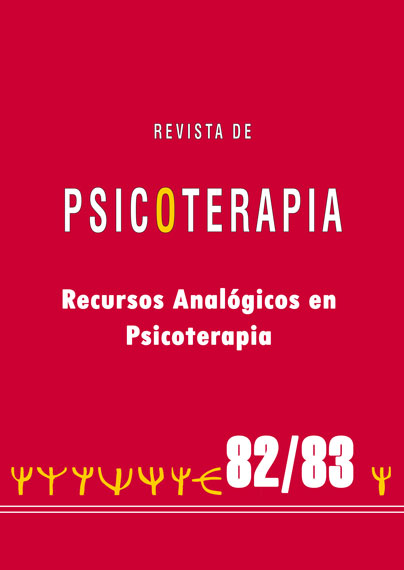
Clinical utility of autobiography
DOI:
https://doi.org/10.33898/rdp.v21i82/83.604Keywords:
Autobiography, Narrative Therapy, Self-Help, Therapeutic AssessmentAbstract
The autobiography is a qualitative and semistructured clinical technique that can be used at different moments of the diagnostic-therapeutic process. It is a valuable starting from which significant contents can be extracted with which to work therapeutically. This explains the richness of the contents it provides in the assessment process, its contribution to the patient’s self-knowledge and the individual’s interpretation of past experiences. The treatment, which revolves around and is based on the autobiography, promotes therapist-patient interactions that allow reelaborations and new autobiographical formulations that, little by little, will reflect the changes ocurring in the process of assessment-therapeutic intervention. The parallelism between the task of verbally expressing what is the matter in the interview and telling one’s storey in written form will be completed during treatment with due feedback. Both forms of communication share common aspects and should complement each other.
Downloads
Downloads
Published
How to Cite
Issue
Section
License
Authors who publish in this journal accept the following conditions:
-
Authors retain copyright and grant the journal the right of first publication, with the work registered under the Creative Commons CC-BY-NC 4.0 International license. This license allows third parties to cite the text and use it without alteration and for non-commercial purposes, provided they credit the authorship of the work and its first publication in this journal.
-
Authors may enter into other independent and additional contractual agreements for the non-exclusive distribution of the version of the article published in this journal (e.g., including it in an institutional repository or publishing it in a book), provided they clearly indicate that the work was first published in this journal.
-
The views expressed in the articles are solely the responsibility of the authors and in no case do they reflect the opinions or scientific policies of the journal.