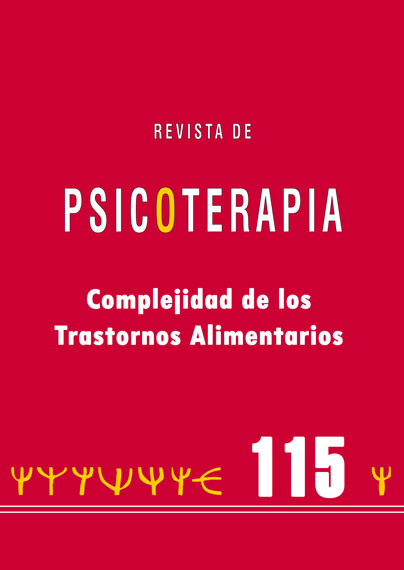
Radically Open -Dialectical Behavior Therapy for Anorexia Nervosa
DOI:
https://doi.org/10.33898/rdp.v31i115.314Keywords:
anorexia nervosa, radical openness, over-control, dialectical behavioral therapyAbstract
Radically Open-Dialectical Bahavioral Therapy (RO-DBT) is a transdiagnoctic therapy designed to address the over-control which is present in serious disorders such as Anorexia Nervosa. Over-control is a maladaptive coping mode that emerges from temperamental and social factors and has been linked to social isolation, relational deficits, hyper-perfectionism, cognitive rigidity, risk aversion and emotional inhibition. RO-DBT aims for open-experience and negative feedback as a learning chance, for the flexibility to adapt to a constantly changing environment, and for the formation of close social bonds. In this treatment pleasure, relaxation and bonding are prioritized, being the main target social-signaling deficits that perpetuate isolation. The aim of this paper is to provide an overview of the core theoretical principles and therapeutic strategies of RO-DBT and the application and usefulness in Anorexia Nervosa.
Downloads
Downloads
Published
How to Cite
Issue
Section
License
Authors who publish in this journal accept the following conditions:
-
Authors retain copyright and grant the journal the right of first publication, with the work registered under the Creative Commons CC-BY-NC 4.0 International license. This license allows third parties to cite the text and use it without alteration and for non-commercial purposes, provided they credit the authorship of the work and its first publication in this journal.
-
Authors may enter into other independent and additional contractual agreements for the non-exclusive distribution of the version of the article published in this journal (e.g., including it in an institutional repository or publishing it in a book), provided they clearly indicate that the work was first published in this journal.
-
The views expressed in the articles are solely the responsibility of the authors and in no case do they reflect the opinions or scientific policies of the journal.