Herramientas digitales para la edición del teatro aurisecular: el informe de una tentativa a partir de EVT (Edition Visualization Technology)
DOI:
https://doi.org/10.5944/rhd.vol.9.2024.41243Palabras clave:
Edición digital, TEI, EVT, teatro del Siglo de Oro, Lope de VegaResumen
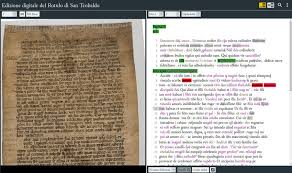
El objetivo de este artículo es dar cuenta de un intento de digitalización llevado a cabo en el contexto de la edición del teatro aurisecular, y más concretamente del teatro de Lope de Vega, con el fin de hacer balance de los avances realizados en materia de Ecdótica Digital. Asimismo, y a partir de los resultados obtenidos en esta experiencia, se intenta poner de manifiesto algunas de las limitaciones y puntos críticos de las herramientas utilizadas y ofrecer una descripción de las soluciones adoptadas, con el objetivo de contribuir a arrojar luz sobre los siguientes pasos a dar para su mejora.
Descargas
Citas
Allés Torrent, S. (2015). Edición digital y algunas tecnologías aliadas. Ínsula: revista de letras y cien-cias humanas, 822, 18-21.
Allés Torrent, S. (2017). “Tiempos hay de acometer y tiempos de retirar”: literatura áurea y edi-ción digital. Studia Aurea. Revista de Literatura española y Teoría literaria del Renacimiento y Siglo de Oro, 11, 13-30.
Antonucci, F. (2017). Calderón Digital. https://calderondigital.tespasiglodeoro.it.
Archivo General de Simancas, Carta del conde de Benavente, virrey de Nápoles, a Felipe III, con la que remite la relación del marqués de Sta. Cruz de la empresa de Longo. Nápoles 2 de julio de 1604, Estado, legajo 1100, 74 y 75.
Casais Vila, V., y Fernández Mosquera, S. (2022). Hacia una biblioteca digital de las comedias de Calderón: el proceso del GIC. Hipogrifo, 10(1), 373-384.
Cuéllar, Á., y Vega García-Luengos, G. (2017-2023). ETSO: Estilometría aplicada al Teatro del Siglo de Oro. http://etso.es.
Fernández Duro, C. (1885). El gran duque de Osuna y su marina: Jornadas contra turcos y venecianos, 1602-1624 (pp. 252-257). Sucesores de Rivadeneyra.
Ferrer Valls, T. (2012). Lope y la creación de héroes contemporáneos: La nueva victoria de don Gonzalo de Córdoba y La nueva victoria del marqués de Santa Cruz. Anuario Lope de Vega, 18, 40-62.
Giuliani, L., Antonucci, F., y Presotto, M. (2017-2023). Gondomar Digital. La colección teatral del conde de Gondomar. http://gondomar.tespasiglodeoro.it.
Giuliani, L. (2020). La biblioteca de Gondomar y la ilusoria búsqueda del eslabón perdido. Anua-rio Lope de Vega. Texto, literatura, cultura, monográfico Los manuscritos teatrales de la bi-blioteca de Gondomar, XXVI, 1-14.
Internet Shakespeare Editions. https://internetshakespeare.ca.
Kroll, S., y Sanz-Lázaro F. (2023). Ritmo e inteligencia artificial: nuevas perspectivas sobre teatro lopesco desde las Humanidades Digitales, Anuario Lope de Vega. Texto, literatura, cultura, 29, 351-375.
McLoughlin, T. (2008). Bridging the gap. Jahrbuch für Computerphilologie, 10, 37-54.
Menéndez Pelayo, M. (Ed.). (1970). Lope de Vega: La nueva victoria del marqués de Santa Cruz, Obras de Lope de Vega. Vol. XXVIII: Crónicas y leyendas dramáticas de España y comedias novelescas (pp. 199-256). Atlas.
Meschini, F. (2014). Edizioni critiche digitali: sul rapporto tra testo, edizione e tecnologia. DigItalia, 8(2), 24–42.
Oleza, J. (Dir.) (2011-). Artelope. Base de Datos y Argumentos del teatro de Lope de Vega. http://artelope.uv.e.
Pierazzo, E., y Driscoll, M. (Eds.). (2015). Digital scholarly editing: Theory, practice and future perspectives. Open Book Publishers.
Presotto, M. (Ed.). (2015). La dama boba: Edición crítica y archivo digital. PROLOPE, Barcelona; Alma Mater Studiorum - Università di Bologna, CRR-MM, Bologna. https://doi.org/10.6092/UNIBO/LADAMABOBA.
Presotto, M. (2018). La edición crítica digital del teatro clásico español. Cuadernos AISPI: Estudio de lenguas y literaturas hispánicas, 11, 31-46.
Presotto, M. (2022). L’edizione del Teatro classico spagnolo e le tecnologie digitali, Saberes humanísticos, ciencia y tecnología en la investigación y la didáctica del hispanismo, Roma: AISPI Edizioni, 150-164.
Presotto, M. (2023). Ecdótica y Humanidades Digitales en el estudio del Teatro clásico español: una experiencia, Revista de Humanidades Digitales, 8, 1-13.
Relación de lo acontescido al marqués de Santa Cruz, general de las galeras de Nápoles, con onze de su esquadra y cinco de la religión de San Juan en el viaje que hizo a levante. (1604). Archivo General de Simanca, Estado, legajo 1100, docs. 74 y 75.
Revenga García, N. (2021). “La Estrella de Sevilla” y las potencialidades de la edición digital. [Tesis de Doctorado]. Universitat de València.
Robinson, P. (2002). What is a Critical Digital Edition? Variants: The Journal of the European Society for Textual Scholarship, 1, 43-62.
Robinson, P. (2005). Current issues in making digital editions of medieval texts—or, do electronic scholarly editions have a future? Digital Medievalist, 1. https://doi.org/10.16995/dm.
Rosselli Del Turco, R., Buomprisco, G., Pietro, C. D., Kenny, J., Masotti, R., y Pugliese, J. (2014). Edition Visualization Technology: A Simple Tool to Visualize TEI-based Digital Editions. Journal of the Text Encoding Initiative, 8. https://doi.org/10.4000/jtei.1077.
Rosselli Del Turco, R. (2016). The battle we forgot to fight: Should we make a case for digital editions? En M. J. Driscoll y E. Pierazzo (Eds.), Digital scholarly editing: Theories and practices (Vol. 4, pp. 219-238).
TEI Consortium. Guidelines for Electronic Text Encoding and Interchange. https://tei-c.org/release/doc/tei-p5-doc/en/html/index.htm.
Usandizaga Carulla, G. (2014). La representación de la historia contemporánea en el teatro de Lope de Vega. Iberoamericana/Vervuert.
Zaccarello, M. (Ed.) (2019). Teoria e forme del testo digitale. Carocci editore.
Descargas
Publicado
Cómo citar
Número
Sección
Licencia
Derechos de autor 2024 Anna Abate, Lorenzo Bocchi

Esta obra está bajo una licencia internacional Creative Commons Atribución-NoComercial 4.0.
Los autores que publican en esta revista están de acuerdo con los siguientes términos:
- Los artículos publicados en la revista se encuentran disponibles en acceso abierto.
- Los autores conservan los derechos de autor y garantizan a la revista el derecho de ser la primera publicación del trabajo al igual que licenciarlo bajo una Licencia Creative Commons Atribución-NoComercial 4.0 Internacional, que permite copiar y redistribuir el material en cualquier medio o formato y remezclar, transformar y construir a partir del material bajo los siguientes términos: debe dar crédito de manera adecuada, brindar un enlace a la licencia, e indicar si se han realizado cambios; no puede hacer uso del material con propósitos comerciales.
- Los autores pueden depositar el trabajo en un repositorio de preprints, postprints, establecer por separado acuerdos adicionales para la distribución no exclusiva de la versión de la obra publicada en la revista (por ejemplo, situarlo en un repositorio institucional o publicarlo en un libro), con un reconocimiento de su publicación inicial en esta revista.
- Se permite y se anima a los autores a difundir sus trabajos electrónicamente (por ejemplo, en repositorios institucionales o en su propio sitio web) antes y durante el proceso de envío, ya que puede dar lugar a intercambios productivos, así como a una citación más temprana y mayor de los trabajos publicados